
Petro Adamyk: “Of course, I dream that every school in Lviv region would have a rugby section”
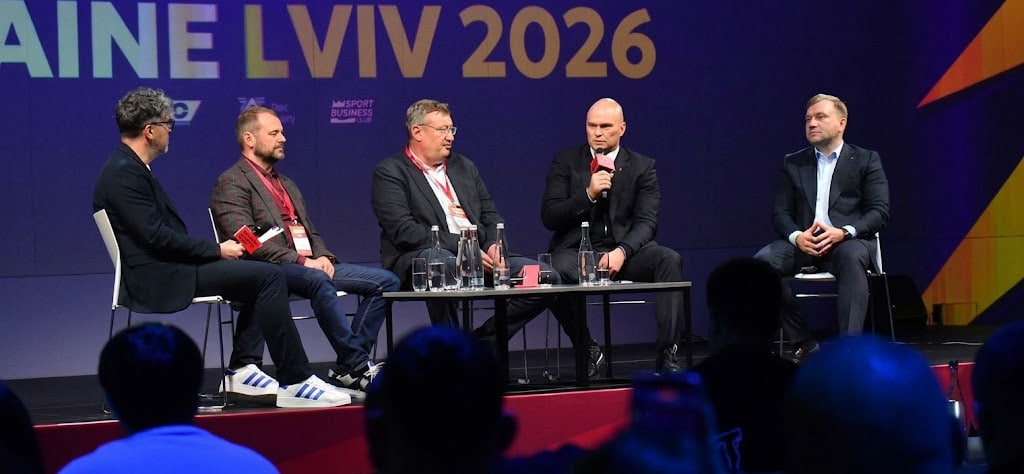
Petro Adamyk, president of the Ukrainian Rugby Association, spoke at SBC Summit Ukraine Lviv 2026. During the discussion he explained how rugby helps draw children into sport, how many teams take part in school competitions in Lviv region and what costs lie behind developing this area. Adamyk paid…
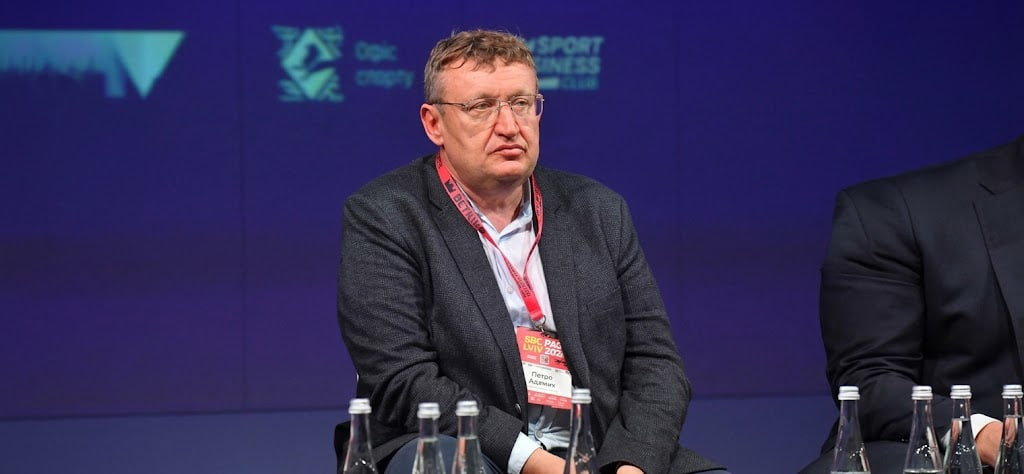
Petro Adamyk, president of the Ukrainian Rugby Association, spoke at SBC Summit Ukraine Lviv 2026. During the discussion he explained how rugby helps draw children into sport, how many teams take part in school competitions in Lviv region and what costs lie behind developing this area. Adamyk paid special attention to funding the national teams, supporting athletes and the opportunities for business to invest in sport.
Rugby as an environment for upbringing
Speaking about the educational role of rugby, Adamyk first of all mentioned people from the sports community who are now defending Ukraine. According to him, more than 40 representatives of rugby have joined the Defence Forces. For him this is one example of how team spirit, patriotism and mutual support go beyond the sports field.
“We have more than 40 people, guys and one girl, fighting. So that is effectively two teams, if we talk about rugby union, a full squad even with substitutes. Obviously this is team spirit, this is teamwork; of course, we instil patriotism, adding to what we get at school and in families. We have patriotic children, a patriotic sport. We have, sadly, already lost many, including one of the presidents of the rugby federation, who died defending Ukraine. So this is very important for us and, in fact, team spirit is socialisation.”
Another task of sport, in Adamyk’s view, is to bring children back to live communication. He drew attention to the competition from gadgets and the difficulty of interesting schoolchildren in activities outside the digital environment. It is team sports, in his opinion, that give children a chance to interact more with one another.
“Any sport pulls children away from the computer and gives them live communication, because we all understand how big a problem it is now to get children interested so that they pull away from their gadgets at all.”
Almost 300 teams in school leagues of Lviv region
For the Ukrainian Rugby Association, one of the main indicators of development, besides the results of the national teams, is the number of children who join the classes. Adamyk stressed that the federation is currently focused on mass participation.
“I am not interested in sporting results; I am interested, in fact, in mass participation. Last year we broke the record for school leagues: there were almost 300 rugby teams. That is across the whole region.”
According to Adamyk, for children from small settlements, taking part in such competitions often becomes a separate event: the participants get a chance to try a new sport and feel part of a team.
“Children in the city are spoiled, but in the region, when you come in with rugby, those children are simply happy. For them it is simply like a holiday. Then they go to some stage. We have five stages of school leagues: the first stage, the second stage, and those children see these competitions, receive medals and certificates.”
Organising such competitions requires additional resources, so the federation tries to involve local business. It is not always a question of large sums; sometimes partners help with food for participants or other small needs. Adamyk gave the example of cooperation with “Lviv Croissants”, which supports children’s tournaments.
“We also try, on our side, to strengthen state funding, so I look for my friends and sponsors, I ask everyone, so that there is such a big list, starting with croissants, which we simply beg for the children, so that 120 children play rugby and afterwards all of them get a croissant. I have a friend who owns ‘Lvivski Kruasany’. He says: ‘Come on, let’s do another competition.’ I say: ‘I have another competition on Saturday,’ and he says: ‘Come on, let’s do it.’”
Adamyk believes that support for sport should not depend only on personal acquaintances and the readiness of individual entrepreneurs to help. He wants business to have clear terms of cooperation with sports organisations and for its contribution to receive proper recognition.
“But we want a system, so that this business understands that the state will not later give it some certificate, but there will be honour and respect for the business that gets into those projects and does not abandon them.”
More than 1,200 rugby-5 teams across Ukraine and the costs of development
Separately, Adamyk spoke about the development of rugby-5, a format that helps draw schoolchildren to the sport. Three years ago a pilot project was launched in Lviv, later scaled to the national level and included in the “Side by Side” programme. The Agency for Mass Sports now handles the area.
“I pushed for it three years ago: we first did a pilot in Lviv, it took off, and we lobbied for it to go to the national level, into the presidential programme. Then the Agency for Mass Sports took it over, and does so well. If we talk about Ukraine, last year it was more than 1,200 teams. Count: seven people each – that is the squad, the coaches, the parents, the involvement. If we talk about Lviv region, it was 300 teams. This year we added another age category: it used to be grades 5–7, now it is also 7–9.”
Expanding the project requires not only organisational work but also significant spending on equipment. Despite the city programme that allows schools to buy sports equipment themselves for 30 thousand hryvnias, the federation provides for rugby-5 needs mainly from its own funds and partner assistance.
“It falls a bit on me and my friends, because, for example, buying a set of tag belts for this costs 30 pounds or 30 euros. There is actually no funding for it. But we, for our part, as the deputy corps in the city of Lviv, made a programme under which every school can buy itself equipment worth 30 thousand hryvnias. We, as a federation, have never used it. I find partners in England, I find partners in Lviv, I find partners in Ukraine, and we buy this at our own expense. So that you understand: for me as federation president, for children of just one age category it is 10 thousand dollars. That is only the tag belts. And my coaches also have to travel around the region; they need food, fuel and so on.”
The federation also looks for help with holding competitions among businesses. For example, Ukrgasbank provided backpacks for 120 participants of last year’s final stage.
“And so all 120 participants of last year’s final stage received a backpack each from one of the banks, let me put it that way, from Ukrgasbank. You should have seen those children’s eyes. One mum took it and said: ‘I’m keeping this, you will go to school with it, not to training, sorry.’ But that is the region. And that is how we look for such small, minor sponsors so that there are more of those children.”
Despite the results already achieved by the leagues, in the longer term Adamyk wants rugby to be available to schoolchildren across the whole region.
“Of course, I dream that every school in Lviv region would have a rugby section, but physically it is actually very hard to achieve.”
400 thousand euros for preparing for Olympic qualification
The women’s team’s victory at the European championship opened new prospects for Ukrainian rugby. Now it is important to find ways for the athletes to continue competing at the international level. In this context Adamyk pointed to how other national teams raise extra funds through the personal popularity of players. An athlete’s own audience can become a tool for finding financial support. As an example he cited the practice of the American team.
“Here we talk about marketing: for example, the captain of the US team has one million two hundred thousand followers and does fundraising. They get donations, half of the costs are funded by the US state, and half they find themselves. That is what we call fundraising.”
For Ukrainian rugby, finding additional funding is a necessity on which the full preparation of the national team depends. Adamyk said it is hard to secure the entire preparation cycle, especially when it comes to qualification for the Olympic Games.
“Today I understand that I will find coaches for the Ukrainian national team, who are sitting here in the hall. But they do not understand how 200 days of training camps will be paid for in order to pass qualification for the Olympic Games. And nobody understands now, the state does not understand either. That is, we do not understand where we will find 400 thousand euros, because it is a big sum for a national team. And if we talk about mass participation, we look for it as managers, because we do not receive it.”
The scale of the problem becomes clearer if one looks at the overall budget of the Ukrainian Rugby Association. In such conditions the federation has to distribute limited funds among different national teams and needs.
“Our whole budget of the Ukrainian Rugby Association last year was about 20 million. And that is not all the national teams: it is rugby-7, an Olympic sport, men’s, rugby-7 women’s, rugby-15, rugby union, rugby-15 women’s, all the children’s ones – U18, U19, U20. It is a pittance, believe me.”
According to Adamyk, with such financial means an important role is played by people who are ready to join the work of federations not only for material reward. It is thanks to their initiative that additional resources can be found and sports areas supported even when the available budget is insufficient.
“And from those small resources we still find something: someone more, someone less. But these are really people whose eyes are burning. And in every federation – all the federation representatives sitting here know this – it is the work of fans, veterans, those whose eyes burn. And then there is a result.”
Female athletes as an example for children and an opportunity for partnerships
The federation is also working to make rugby visible not only through results in competitions. It is important to show children the people who represent this sport and the stories they can identify with. Adamyk believes such examples help young rugby players understand the values of the game and motivate them to stay in sport.
“Those children who train also see; later they will be an example for the children who come to the sections. Because one of our girls, who is 26, has been fighting for the third year. We call her to the national team from the front. And you should see how the children, the girls who train in our sections of the Lviv Rugby Federation, look at her.”
Another line of work is promoting female athletes and creating opportunities for them to work with brands. Adamyk noted that the federation tells about the players’ achievements on social media, works on their image and tries to find individual contracts. However, such opportunities are still few.
“And those girls from Lviv region became European champions. That is already a brand, right? And we do this, of course, on social media, creating image materials for them. That is, we promote the athletes, we try to make individual contracts with sports brands for them. But so far it is a pittance.”
Business needs clear rules for supporting sport
Adamyk links the question of business support for sport to the need to change the very approach to such investments. In his view, companies should be full participants in a system in which it is clear how financial support of sport works.
“As an entrepreneur, I would like my taxes to go to sport on a targeted basis. So we have a question for the minister and for government officials: maybe one of you will become some minister or a member of the Verkhovna Rada, a legislator, in five years, so I really want you to lobby for a law on patronage. So that some part would go to sport on a targeted basis. And that will be very cool. For veteran sport that will be very cool. It will be very right for a business to choose whom it trusts, directly a federation or some association.”
Adamyk separately stresses the reciprocity of such relationships. Business must see a clear mechanism for recovering part of the invested resources rather than relying only on its own motivation to support sport.
“We still want a systemic story from the state, so that there are rules for where one can go in and get satisfaction, having spent business money, get some material satisfaction”.
Lviv’s sports infrastructure and the priority of children’s sport
Speaking about cooperation with local authorities, Adamyk cited Lviv as an example of a community where sports needs are taken into account in developing the city’s infrastructure. He noted the work of the Sports Office and the deputy corps of the city council, and in particular mentioned a project that combines a safety function with the needs of a sports arena.
“I want to thank the Sports Office and that friendly team, and the deputy corps of the Lviv City Council, who really work in sport. If we talk about the Lviv community, it is probably one of the few that built a shelter during the war. It is also the stand of the arena in the Park of Culture. It is a truly infrastructural facility built during the war.”
At the same time, developing sports infrastructure is not limited to individual arenas. Mass involvement of children in sport requires various conditions and opportunities that allow them to practise regardless of the chosen discipline. Adamyk drew attention to needs that remain relevant for the city.
“But that is actually not enough. We need swimming pools, we need children in sport, because healthy and strong children later mean huge savings on healthcare for adults.”
Among the areas that the Association develops alongside traditional disciplines, Petro singled out wheelchair rugby. For this sport Adamyk sees the prospect of full-fledged national competitions. However, expanding the areas of work does not change the federation’s main emphasis: attracting children to rugby.
“Of course, wheelchair rugby is also the future, sadly. But we will do it and are already doing it. I very much hope there will be a full Ukrainian championship in wheelchair rugby. But, of course, the priority is children. Because in childhood we will instil in them collectivism, interaction, socialisation and self-confidence. That is very important. And that is what we adults must give them”.
Adamyk gives coaches an important role in this work. Their influence on children does not end at the training ground; they can become people a child turns to for support and guidance. That is why the Association’s president urges coaches to combine sports training with an attentive attitude to their pupils.
“Because now very many families are divided. I want my coaches and your children’s coaches to be more like teachers, kinder to the children. Children are the main thing. This is what we are actually fighting for.”
Sponsors and partners of SBC Summit Ukraine 2026 Lviv
Co-organisers – Mass Sports Agency of Ukraine and Sports Office of the Lviv City Council
Construction partner – system developer RIEL
Business Lounge partner – Jack Daniel’s Gentleman Jack
Accommodation partner – Kostjukowki Apartments. Sports equipment partner – Kappa x KOKOTASPORTS. Mood partner – PRAVDA brewery. Location partner – Barvy Event Hall
Football partner – educational platform Play Vision. Official partner – Ukrainian Karate Federation. Social partner – Shakhtar Social foundation. Exclusive fitness partner – UNI FORCE.
Media partner – media service MEGOGO, Ukraine’s largest media service, which streams exclusive sport, TV channels, films from leading studios and educational courses.
Water partner – Karpatska Dzherelna. Coffee partner – Sky Coffee. Functional partner – DR WITT. Sweet partner – BISCOTTI.
Production partner – NAZHYVO Production. Grooming partners – Barbers, Medosan and Joko Blend. Official partner – restaurant group “Marymo svoieiu spravoiu”.
Technology partner – BotsBand. Style partner – YARMICH. Technical partner – PROOVE. General radio partner – Lvivska Khvylia.
Hospitality partner – IBIS hotel cluster. Digital partner – ROAS marketing agency Red5. Business partner – business park “Europasazh”.
Social partner – Veterans Institute “Architecture of Resilience” of KNUBA. Sports partner – Ukrainian Padel Federation.
Media partners of Sport&Business Club – Epicentr, Avtoradio, Kyivstar TV and Setanta Sports. Advertising partner – MS Outdoor.
Information partners – the TV channels “Mi – Ukraina” and “Mi – Ukraina+”, Marketer, Tribuna.com, Football Hub, Interfax, the websites Sport.ua, SportArena.com, UA.NEWS and XSPORT, the news portal “Korol Danylo”, the platform “Football 2.0”, “Egoist” and PEREHOVORKA. Fashion partner – Fashion TV
Source: Sport Business Media (sportbusiness.media), https://sportbusiness.media/2026/11/01/petro-adamyk-ya-zvychajno-mriyu-shhob-kozhna-shkola-na-lvivshhyni-mala-sekcziyu-z-regbi/